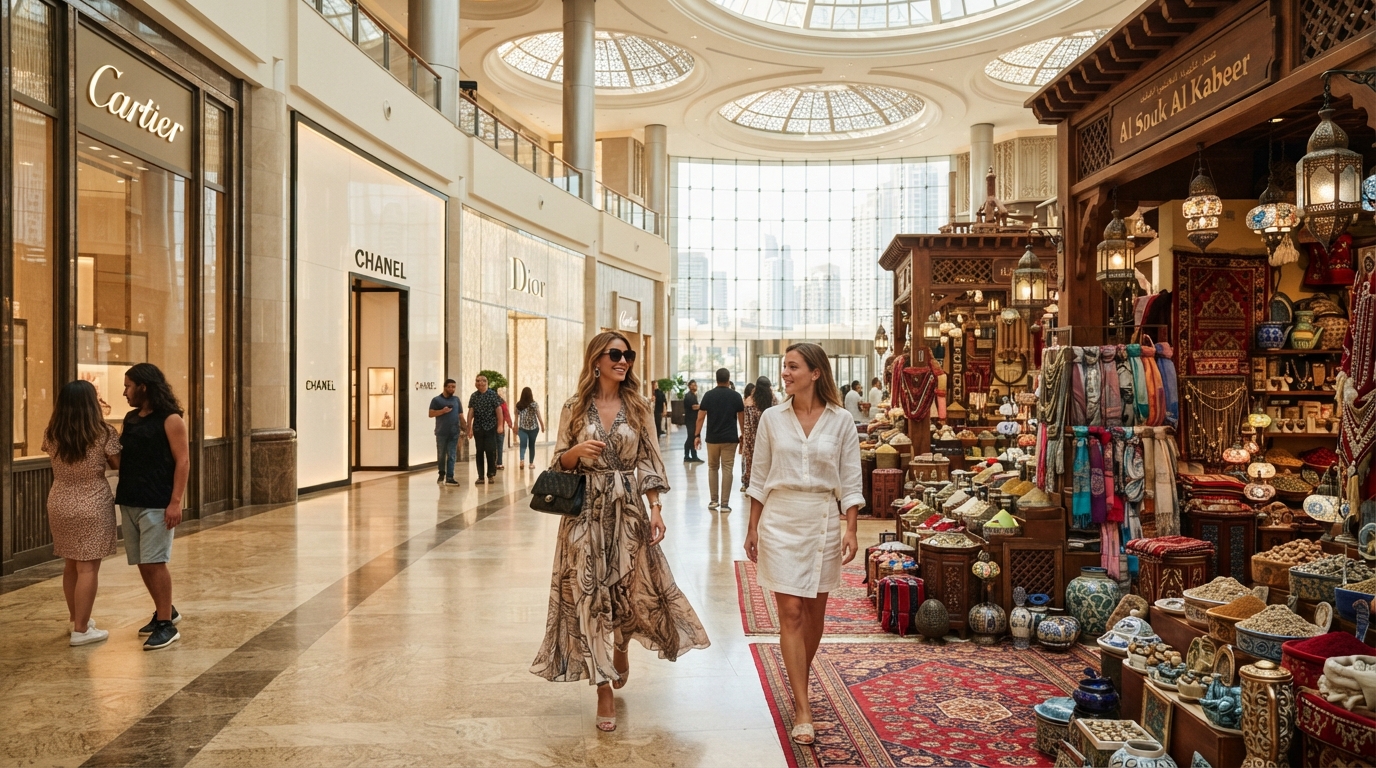
Dubai is much more than a luxury shopping destination. The city brings together enormous modern malls, centuries-old trading traditions, vibrant souks, Emirati heritage, international cuisine, Arabic perfumes, gold jewelry, museums, art, and neighborhoods where visitors can experience a very different side of the UAE.
This ultimate Dubai shopping and culture guide explains how to experience both sides of the city—from shopping at Dubai Mall and Mall of the Emirates to exploring the Gold Souk, Spice Souk, Al Fahidi Historical Neighbourhood, Dubai Creek, traditional markets, museums, and local food experiences.
Whether you are visiting Dubai for the first time or returning for another holiday, combining shopping in Dubai with cultural experiences can make your trip considerably more rewarding.
Dubai Shopping and Culture at a Glance
Dubai has developed a reputation for world-class retail, but its shopping culture has much deeper roots. Long before giant shopping malls appeared, merchants traded spices, textiles, pearls, gold, perfumes, and other goods around Dubai Creek.
Today, you can experience both worlds in the same trip.
Modern Dubai offers:
- Luxury shopping
- International fashion brands
- Designer shopping
- Large shopping malls
- Electronics and lifestyle products
- Dubai shopping festivals
- Family entertainment
Traditional Dubai offers:
- Gold and jewelry
- Spices
- Arabic perfumes and oud
- Textiles
- Carpets
- Handicrafts
- Traditional clothing
- Dates and sweets
- Authentic Emirati experiences
That combination is what makes a Dubai shopping experience unique.
Why Dubai Is Famous for Shopping
Dubai is internationally recognized as one of the world's major retail destinations. Its shopping scene ranges from enormous malls filled with global brands to small stores and traditional Arabian souks.
For visitors, Dubai shopping can mean anything from purchasing designer fashion and luxury products to negotiating over spices or souvenirs in an old market.
The city is particularly attractive to shoppers because different experiences are concentrated within relatively accessible areas. A visitor can spend the morning exploring the historic streets of Deira, enjoy lunch near Dubai Creek, and later visit a luxury shopping mall in Downtown Dubai.
The result is a shopping experience that connects the city's past with its modern identity.
Best Shopping in Dubai: Malls, Souks and Shopping Districts
There is no single answer to where you will find the best shopping in Dubai. It depends on what you want to purchase.
If your priority is international brands and luxury, modern malls are ideal. If you want traditional products and local atmosphere, Dubai's souks are much more interesting.
Dubai Mall
Dubai Mall is one of the most famous shopping malls in Dubai and a major attraction in Downtown Dubai.
It combines retail shopping with restaurants, entertainment, attractions, and access to the wider Downtown Dubai area.
It is a particularly convenient option if you want to combine shopping with sightseeing.
Visitors can explore:
- International fashion brands
- Luxury brands
- Designer fashion
- Beauty products
- Electronics
- Jewelry
- Restaurants and cafés
- Entertainment attractions
For travelers staying around Downtown Dubai, Dubai Mall is an obvious addition to a Dubai shopping itinerary.
Mall of the Emirates
Another major retail destination is Mall of the Emirates, known for its broad selection of fashion, lifestyle, dining, and entertainment options.
The mall is especially useful for travelers looking for luxury shopping in Dubai, international brands, and an indoor shopping environment.
Other Dubai Shopping Destinations
Beyond the largest malls, travelers can explore:
- City Centre Mirdif
- Dubai Marina shopping areas
- JBR shopping
- Jumeirah shopping
- Palm Jumeirah shopping
- Downtown Dubai shopping
- Dubai outlet malls
- Specialized retail districts
These areas provide different types of Dubai retail shopping, from everyday purchases to luxury fashion.
Dubai Souks: Where Shopping Meets History
A trip to Dubai would be incomplete without experiencing its traditional markets.
Dubai souks represent an important part of the city's commercial history. The atmosphere is completely different from modern malls, with narrow market streets, shopfronts filled with products, traditional scents, and merchants selling goods that have been traded across the region for generations.
The most famous traditional markets are concentrated around Deira and Bur Dubai.
Dubai Gold Souk
The Dubai Gold Souk is perhaps the city's most famous traditional shopping destination.
Located in Deira, the market is associated with gold jewelry, precious metals, and elaborate designs.
Gold shopping in Dubai attracts both tourists and residents. Visitors can find traditional and contemporary jewelry designs, although prices depend on factors such as gold weight, purity, workmanship, and the current market rate.
If you are purchasing gold jewelry, compare designs and workmanship and make sure you understand the final price before completing the transaction.
The Gold Souk is also a good example of how traditional jewelry in Dubai continues to exist alongside the city's modern luxury retail industry.
Dubai Spice Souk
The Dubai Spice Souk provides a completely different sensory experience.
The market is filled with spices, dried ingredients, herbs, teas, nuts, and other products associated with Middle Eastern, Asian, and regional cuisines.
For anyone interested in spice shopping in Dubai, Deira's traditional markets are worth exploring.
The Spice Souk also helps visitors understand the historical importance of Dubai as a trading center connecting Arabia with South Asia, Persia, Africa, and other parts of the world.
Dubai Textile Souk
For fabrics and traditional clothing, the Dubai Textile Souk in Bur Dubai is another interesting stop.
You can find:
- Fabrics
- Scarves
- Traditional materials
- Embroidery
- Garments
- Souvenir textiles
- Fashion accessories
The surrounding Bur Dubai souks provide a glimpse into old Dubai markets, particularly when explored alongside Dubai Creek and the historic neighborhoods nearby.
Shopping in Deira and Bur Dubai
Shopping in Deira and shopping in Bur Dubai offers a different experience from visiting Dubai's modern malls.
Deira has long been associated with traditional commerce, while Bur Dubai contains important historic and cultural attractions.
A visitor interested in authentic Dubai experiences can combine:
Gold Souk → Spice Souk → Dubai Creek → Al Fahidi Historical Neighbourhood → Textile Souk
This type of route creates a natural Dubai cultural itinerary while leaving plenty of opportunities for shopping.
What to Buy in Dubai
One of the most common questions travelers ask is: What should tourists buy in Dubai?
The answer depends on whether you prefer luxury products, practical gifts, or traditional items.
Some popular choices include:
Gold and Jewelry
Gold remains one of the most recognizable products associated with Dubai. Jewelry is widely available in traditional markets and modern shopping centers.
Arabic Perfumes and Oud
Arabic perfumes, oud, incense, and concentrated fragrances are popular purchases.
For visitors interested in oud perfume in Dubai, traditional perfume stores can provide an opportunity to explore scents that differ considerably from mainstream Western fragrances.
Spices
Spices are lightweight, practical souvenirs and can introduce you to flavors commonly associated with Middle Eastern and South Asian cooking.
Dates
Dates are another classic UAE purchase. They are commonly available in different varieties and presentations, including gift boxes suitable for taking home.
Traditional Clothing
Visitors may also encounter:
- Abayas
- Kanduras
- Scarves
- Traditional fabrics
- Arabic fashion
- Embroidered garments
Handicrafts
Emirati handicrafts and traditional products can provide more culturally meaningful souvenirs than generic tourist merchandise.
Other possibilities include carpets, decorative items, Arabic sweets, perfumes, and specialty food products.
Best Souvenirs from Dubai
If you want authentic Dubai souvenirs, consider products connected to the region's culture rather than only mass-produced tourist items.
Good options include:
- Dates
- Arabic coffee
- Oud
- Arabic perfumes
- Spices
- Traditional sweets
- Small handicrafts
- Textiles
- Decorative items
- Traditional clothing
- Gold jewelry
These products can also serve as traditional gifts from Dubai for family and friends.
Understanding Emirati Culture
Shopping is only one part of the Dubai experience.
The city is home to a rapidly modernizing society while maintaining strong connections to Emirati culture, UAE culture, family traditions, hospitality, religion, architecture, food, and heritage.
Understanding a few aspects of Dubai culture and traditions can make your visit more respectful and meaningful.
Emirati Hospitality
Emirati hospitality is an important part of local culture.
Guests may encounter Arabic coffee, dates, traditional food, and the welcoming customs associated with the region.
The concept of hospitality is closely connected with the traditional majlis culture, where guests gather for conversation, refreshments, and social interaction.
Traditional Emirati Clothing
Traditional clothing remains an important part of Emirati identity.
Men may wear the kandura, while women may wear the abaya along with other forms of modest dress.
Visitors will see traditional clothing alongside contemporary Dubai fashion, demonstrating the way modern lifestyles and heritage coexist.
Exploring Old Dubai
Anyone looking for Dubai heritage should spend time away from the skyscrapers.
Old Dubai is particularly important because it provides context for how the city developed from a trading settlement into a global metropolis.
Key areas include:
- Dubai Creek
- Al Fahidi Historical Neighbourhood
- Bur Dubai
- Deira
- Al Shindagha
- Traditional souks
These areas are among the most valuable Dubai historical places for visitors interested in the city's origins.
Al Fahidi Historical Neighbourhood
The Al Fahidi Historical Neighbourhood is one of the best places to explore traditional Emirati architecture and understand Dubai's earlier urban environment.
Its narrow lanes, courtyards, wind towers, and restored buildings provide a sharp contrast with the glass towers of modern Dubai.
Walking through Al Fahidi can be one of the best cultural experiences in Dubai, particularly for travelers who want to understand the city beyond shopping malls.
Dubai Creek and the Birth of a Trading City
Dubai Creek played a central role in Dubai's commercial development.
Traditional trading activities involving pearls, textiles, spices, and other goods helped establish the city's reputation as an important regional trading center.
Today, the Creek remains an excellent place to experience the contrast between historic Dubai and the modern city skyline.
You can combine a Creek visit with Deira Gold Souk, the Spice Souk, and Bur Dubai for a compact introduction to the city's historic trading culture.
Museums and Cultural Attractions in Dubai
Dubai's museums provide another way to explore the country's history.
Important cultural attractions include:
- Al Shindagha Museum
- Etihad Museum
- Dubai Museum and heritage attractions
- Museum of the Future
- Art galleries and cultural spaces
The Al Shindagha Museum is particularly useful for visitors interested in Dubai's heritage and historical development.
The Etihad Museum provides context about the formation of the United Arab Emirates and the country's modern history.
Meanwhile, the Museum of the Future represents the opposite end of the spectrum, focusing on innovation, technology, and future-oriented ideas.
Together, these attractions illustrate the breadth of Dubai arts and culture.
Dubai Art Scene and Emirati Art
Dubai has developed a growing art scene that includes galleries, exhibitions, cultural institutions, public installations, and contemporary artists.
Visitors interested in Emirati art, Islamic art, photography, design, and contemporary creative work can explore galleries and cultural districts throughout the city.
This is an important part of Dubai arts and culture that is sometimes overlooked by travelers who focus exclusively on malls and beaches.
Dubai Food Culture
Food is another excellent way to experience the city's cultural diversity.
Dubai food culture combines Emirati traditions with influences from the wider Gulf, South Asia, the Middle East, Africa, and international communities.
While Dubai has restaurants representing cuisines from almost every part of the world, travelers should also make time for traditional Emirati food.
Traditional Emirati Food to Try
Depending on the restaurant or cultural experience, visitors may encounter dishes such as:
- Machboos
- Harees
- Luqaimat
- Thareed
- Balaleet
- Emirati breakfast dishes
- Arabic coffee
- Dates
For travelers asking where to try Emirati food, look for restaurants and cultural dining experiences specializing in local cuisine rather than limiting your food itinerary to international restaurants.
Arabic Coffee, Dates and Emirati Hospitality
Arabic coffee in Dubai is closely connected to hospitality.
It is traditionally served in small cups and is often accompanied by dates.
For visitors, trying Arabic coffee is more than tasting a beverage—it is an opportunity to experience an aspect of Emirati lifestyle and hospitality.
Dates also remain culturally and commercially important and are among the easiest Dubai souvenirs to take home.
Dubai Street Food and Food Markets
Dubai's international population has created a diverse street-food culture.
You can find everything from South Asian snacks to Middle Eastern specialties, Arabic sweets, grilled foods, and contemporary food concepts.
Traditional markets can be especially interesting because shopping for spices and ingredients can be combined with tasting regional food.
A Dubai food market visit can therefore become both a culinary and cultural experience.
Luxury Shopping vs Traditional Shopping in Dubai
One of the best ways to understand Dubai is to experience both extremes.
Modern DubaiTraditional DubaiDubai MallGold SoukLuxury brandsTraditional productsDesigner fashionTextilesInternational restaurantsEmirati cuisineModern architectureTraditional architectureGlobal retailLocal merchantsDowntown DubaiDeira and Bur DubaiNeither experience replaces the other.
Modern shopping demonstrates Dubai's global ambitions, while the traditional markets reveal the commercial and cultural foundations on which the city developed.
Is Shopping in Dubai Expensive?
Dubai can accommodate almost every shopping budget.
A luxury shopping trip can involve designer fashion, high-end jewelry, premium dining, and exclusive experiences.
At the same time, affordable shopping in Dubai is possible in traditional markets, local stores, outlet centers, and selected shopping districts.
Your Dubai shopping budget therefore depends heavily on what you purchase.
Before shopping, establish whether your priority is:
- Luxury
- Fashion
- Souvenirs
- Food
- Gold
- Perfume
- Traditional products
- Everyday items
This will help you choose the right shopping areas.
Bargaining in Dubai Souks
Bargaining in Dubai souks can be part of the shopping experience, particularly for certain products in traditional markets.
However, bargaining does not apply equally to every store or product.
If you are wondering how to bargain in Dubai, a polite approach works best:
- Ask for the price.
- Compare with nearby shops.
- Make a reasonable counteroffer.
- Keep the conversation friendly.
- Confirm exactly what is included in the final price.
Traditional souks are commercial environments, so visitors should treat merchants respectfully while making their purchasing decisions.
VAT and Tourist Shopping in Dubai
The UAE applies VAT to many goods and services.
Eligible international visitors may be able to participate in the tourist VAT refund process when purchasing from participating retailers and meeting the applicable requirements.
If you are planning substantial purchases, keep your invoices and follow the official refund procedure.
VAT rules and refund procedures can change, so travelers should check the latest official information before making major purchases.
Best Time for Shopping in Dubai
Shopping is possible throughout the year, but timing can influence the atmosphere, prices, events, and crowds.
Many visitors enjoy shopping during:
- Dubai Shopping Festival
- Major seasonal promotions
- Holiday periods
- Cooler months
- Special retail events
The Dubai Shopping Festival is particularly associated with promotions, entertainment, retail offers, and citywide shopping activities.
If shopping is one of the main purposes of your trip, check current festival dates and retailer promotions before traveling.
Dubai Shopping During Ramadan
Dubai shopping during Ramadan can provide a distinctive cultural experience.
Shopping malls may have extended operating hours, and evenings can become particularly lively after sunset.
Visitors should also remember that Ramadan is an important religious period. Respectful clothing, behavior, and awareness of local customs are important.
It is a good opportunity to experience aspects of Ramadan traditions in Dubai, including evening gatherings and special food experiences.
Dubai Shopping Hours
Shopping hours vary by location and individual retailer.
Large malls generally operate for extended periods, while traditional markets may follow different schedules.
Dubai shopping hours can also change during Ramadan, public holidays, festivals, and special events.
If a particular store or attraction is important to your itinerary, check its current operating hours before visiting.
Dubai Shopping and Cultural Etiquette
Visitors should remember that Dubai is an international city with strong cultural traditions.
Some useful Dubai shopping rules and etiquette include:
- Dress respectfully, particularly in cultural and religious locations.
- Ask before photographing people.
- Treat shopkeepers and staff respectfully.
- Follow posted photography restrictions.
- Be aware of local customs.
- Respect religious practices.
- Keep public behavior appropriate.
- Check customs requirements before taking certain products out of the UAE.
Understanding UAE cultural etiquette makes interactions easier and helps visitors enjoy the city respectfully.
A Perfect Dubai Shopping and Culture Itinerary
If you have limited time, you can combine shopping and culture into one day.
Morning: Old Dubai
Start around Al Fahidi Historical Neighbourhood.
Explore traditional architecture, heritage spaces, small galleries, and nearby cultural attractions.
Late Morning: Dubai Creek
Continue toward Dubai Creek and explore the historic waterfront.
Afternoon: Souks
Visit:
- Textile Souk
- Spice Souk
- Gold Souk
This is the ideal time to explore traditional products and purchase souvenirs.
Evening: Downtown Dubai
Move to Downtown Dubai for modern shopping.
Explore Dubai Mall, enjoy dinner, and experience the modern skyline.
This itinerary allows you to experience Dubai shopping and sightseeing while seeing both the historic and modern sides of the city.
How to Experience Authentic Dubai Culture
Travelers looking for authentic Dubai experiences should go beyond the city's most famous attractions.
Consider:
- Exploring Old Dubai on foot
- Visiting traditional souks
- Trying Emirati food
- Drinking Arabic coffee
- Learning about Emirati traditions
- Visiting heritage museums
- Exploring Dubai Creek
- Visiting cultural neighborhoods
- Shopping for locally inspired products
- Learning about traditional architecture
These activities can reveal a more nuanced picture of Dubai than simply visiting its skyscrapers.
Hidden Gems and Offbeat Dubai Experiences
Although Dubai is famous for its mega-attractions, there are also hidden gems in Dubai that provide quieter cultural experiences.
Travelers interested in offbeat Dubai experiences can explore smaller galleries, historic neighborhoods, traditional markets, cultural centers, local cafés, and less tourist-focused areas.
One of the best strategies is simply to spend more time in Old Dubai instead of moving immediately between major attractions.
Dubai Shopping Tips for First-Time Visitors
Before starting your shopping trip, keep these practical tips in mind:
1. Compare prices
Especially when buying gold, perfumes, textiles, and souvenirs.
2. Ask about the final price
Make sure you understand taxes, workmanship, delivery, or other charges where applicable.
3. Keep receipts
Receipts can be important for returns, warranties, and VAT-related procedures.
4. Don't limit yourself to malls
Some of the most memorable shopping experiences happen in traditional souks.
5. Leave space in your luggage
It is easy to purchase more than expected in Dubai.
6. Research before buying expensive products
For gold, jewelry, electronics, and luxury products, understand specifications and pricing before committing.
Dubai Shopping and Culture: The Bigger Picture
The real appeal of Dubai is not simply the number of stores.
It is the contrast.
You can walk through a historic neighborhood where traditional wind towers and courtyards preserve the character of old Dubai, explore a centuries-old trading market, drink Arabic coffee, and then spend the evening inside one of the world's most modern shopping environments.
That contrast is at the heart of the Dubai shopping experience.
The city's malls demonstrate its role as a global retail destination, while its souks, food, architecture, museums, and traditions reveal the cultural foundations of the UAE.
Frequently Asked Questions About Dubai Shopping & Culture
What is Dubai famous for shopping?
Dubai is famous for luxury fashion, gold jewelry, perfumes, electronics, international brands, traditional souks, spices, textiles, and unique shopping experiences.
What should tourists buy in Dubai?
Popular purchases include gold jewelry, Arabic perfumes, oud, spices, dates, traditional clothing, handicrafts, Arabic sweets, textiles, and souvenirs.
Where is the best place to shop in Dubai?
The best place depends on what you want. Dubai Mall and Mall of the Emirates are excellent for modern and luxury shopping, while the Gold Souk, Spice Souk, and Textile Souk are better for traditional products.
Can tourists bargain in Dubai souks?
Yes, bargaining can be part of shopping in some traditional souks. It is best to negotiate politely and compare prices between shops.
Where can I experience traditional Emirati culture in Dubai?
Al Fahidi Historical Neighbourhood, Al Shindagha, Dubai Creek, heritage attractions, museums, traditional markets, and Emirati dining experiences are good places to start.
What foods are part of Emirati culture?
Traditional Emirati cuisine includes dishes such as machboos, harees, thareed, balaleet, luqaimat, and other regional specialties. Arabic coffee and dates are also strongly associated with Emirati hospitality.
Where can I buy authentic Arabic perfumes in Dubai?
Traditional perfume stores and souks are popular places to explore Arabic perfumes, oud, incense, and concentrated fragrances.
What are the best museums to visit in Dubai?
Al Shindagha Museum and Etihad Museum are particularly relevant to visitors interested in UAE and Dubai history. The Museum of the Future provides a contrasting focus on innovation and future technologies.
Is Dubai shopping expensive?
It can be, particularly for luxury products, but there are also many opportunities for affordable shopping in Dubai through traditional markets, outlet stores, local retailers, and seasonal promotions.
How can tourists experience authentic Dubai culture?
Spend time in Old Dubai, visit traditional souks, explore heritage neighborhoods, try Emirati cuisine, experience Arabic coffee and dates, visit museums, and learn about Emirati traditions and customs.
Conclusion: Experience Dubai Beyond the Shopping Mall
The Ultimate Dubai Shopping & Culture Guide is ultimately about experiencing two sides of the same city.
Explore the luxury stores and designer fashion of modern Dubai, but also walk through the Gold Souk, smell spices in Deira, browse textiles in Bur Dubai, cross Dubai Creek, discover Al Fahidi's historic architecture, taste Emirati food, and learn about the traditions that shaped the UAE.
From luxury shopping Dubai to traditional Arabian souks, from Dubai fashion to Emirati clothing, and from contemporary art to centuries-old trading traditions, the city offers an unusually broad travel experience.
If you plan your trip around both Dubai shopping and Dubai cultural experiences, you will leave with more than shopping bags—you will have a better understanding of the history, people, traditions, food, and global identity that make Dubai one of the world's most distinctive destinations.